Watches
How to catalog
your watch collection.
A practical guide to keeping track of what you own — the specs, the service dates, what each piece cost — and an honest look at where to keep it.
Why catalog at all?
For one watch, you don't. The trouble starts around the third or fourth, when the details stop fitting in your head. A catalog isn't about looking like a serious collector. It's about answering the small, real questions a collection keeps asking you.
- When was this last serviced? A mechanical movement runs five years or so between services. If you can't say the date, you can't plan the cost, and you tend to find out the hard way.
- What's the reference number again? The number on the caseback you need for a strap, a part, an insurance claim, or a listing. Always when the watch isn't in your hand.
- What did I actually pay? Box, papers, the price, where it came from, the date. The paper trail that lets you sell or insure a watch with a straight face.
- What am I not wearing? Most collections have a quiet half that never leaves the box. Worth knowing before you buy the next one.
A catalog answers these in a few seconds instead of a few drawers. That's the whole case for keeping one.
What to record for each watch.
You don't need all of this on day one. Start with the basics and let the rest fill in as you go. Over time, a good entry holds:
- The identity. Brand, model, reference number, and serial. The facts that make a watch this watch and not a similar one.
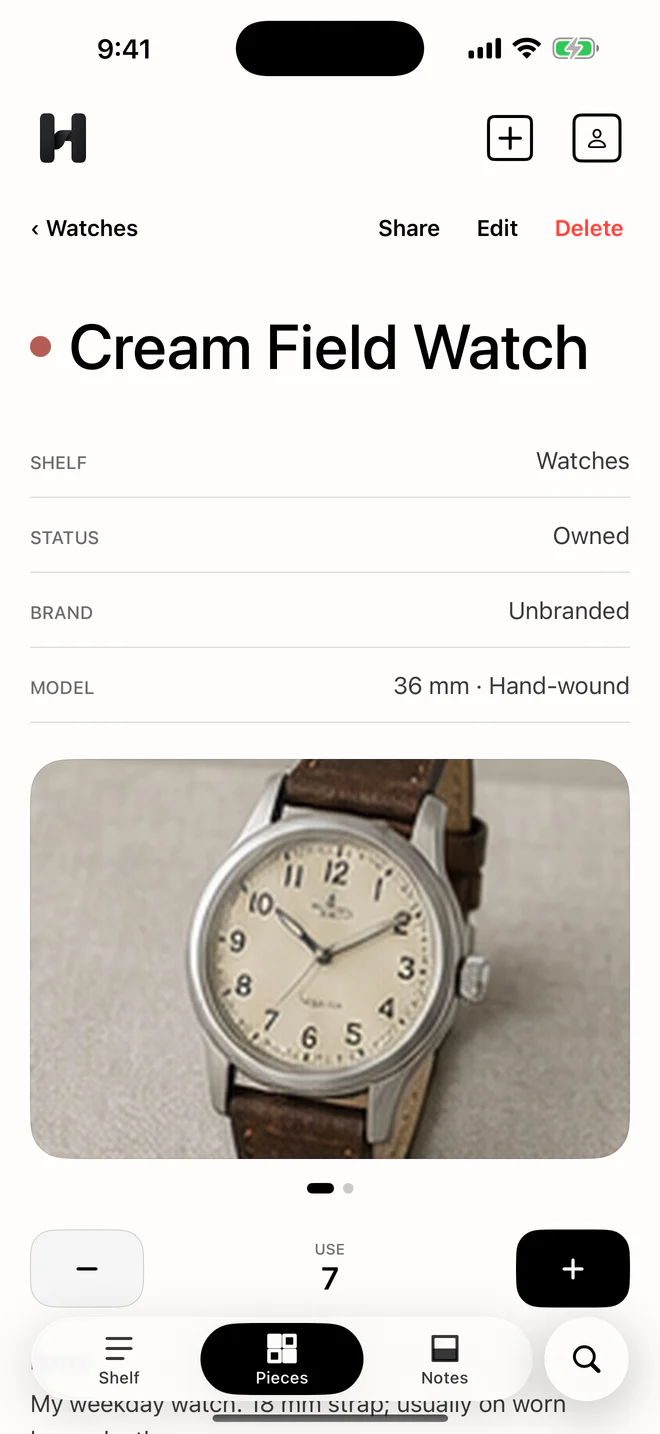
- The specs you forget. Case size, movement or caliber, power reserve, lug width for straps, crystal, water resistance.
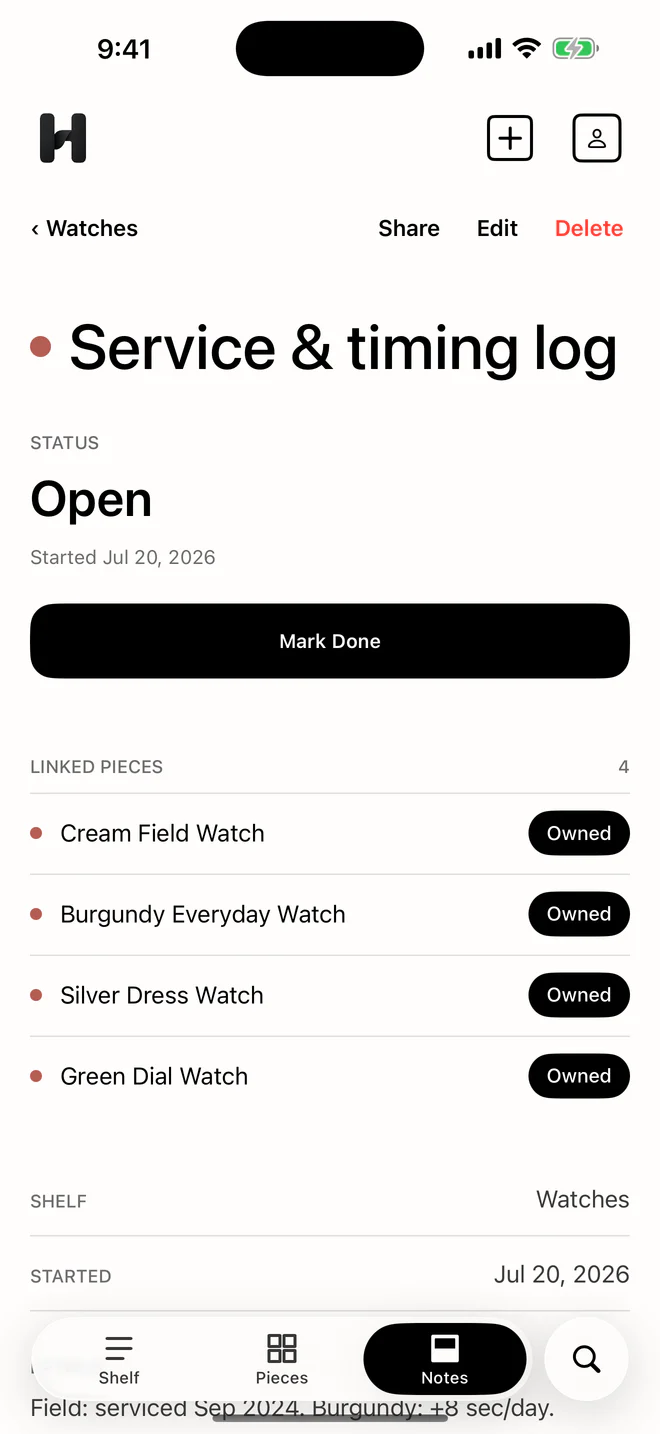
- The history. Purchase date and price, dealer or seller, and whether you have the box and papers. Plus every service: the date, the watchmaker, what was done.
- The pictures. The dial, the caseback, the papers. A few photos do more for a future sale or claim than any field of text.
That last point matters more than people expect. Years later, a clear photo of the caseback and the original receipt is what makes a sale easy and an insurance claim simple.
Spreadsheet, database app, or dedicated catalog?
There's no single right answer, so here's the honest version of each.
A spreadsheet is free, it's yours, and it does exactly what you tell it. Plenty of careful collectors never use anything else. The cost is friction: you build every column by hand, photos live somewhere else, and pulling it up on your phone at a meetup is a small ordeal. If you like spreadsheets, you already know this, and you're probably set. If you don't, you'll start one, add four watches, and never open it again.
A database app sits in the middle. Tidier than a spreadsheet, flexible, decent on a phone. But you're still designing the thing before you can use it, and your collection now lives on someone else's servers, behind a login, syncing to the cloud whether you wanted that or not.
A dedicated catalog saves you the setup. The fields for a watch are already there, photos attach to the entry, and it's built for a phone. The question worth asking is the same one any cloud tool raises: where does the data actually live, and who else can reach it?
Why collectors leave the cloud catalogs.
Many popular watch catalogs run as accounts in the cloud. You sign up, and your collection sits on their servers. That buys you market valuations and a tidy app, and for some people the trade is worth it.
For others it isn't. A list of every watch you own, what you paid, and where you keep them is sensitive on its own. Tie it to an email and a market price, and it becomes a target. People close these accounts for plain reasons: a service that valued collections starts trying to broker them, the valuations were never the point, or they'd simply rather a record of what's in the safe didn't live on a server they don't control.
Hoblio takes the other side of that trade. No market valuation, no marketplace. Just your own record, kept where you keep your phone.
What a watch costs to own.
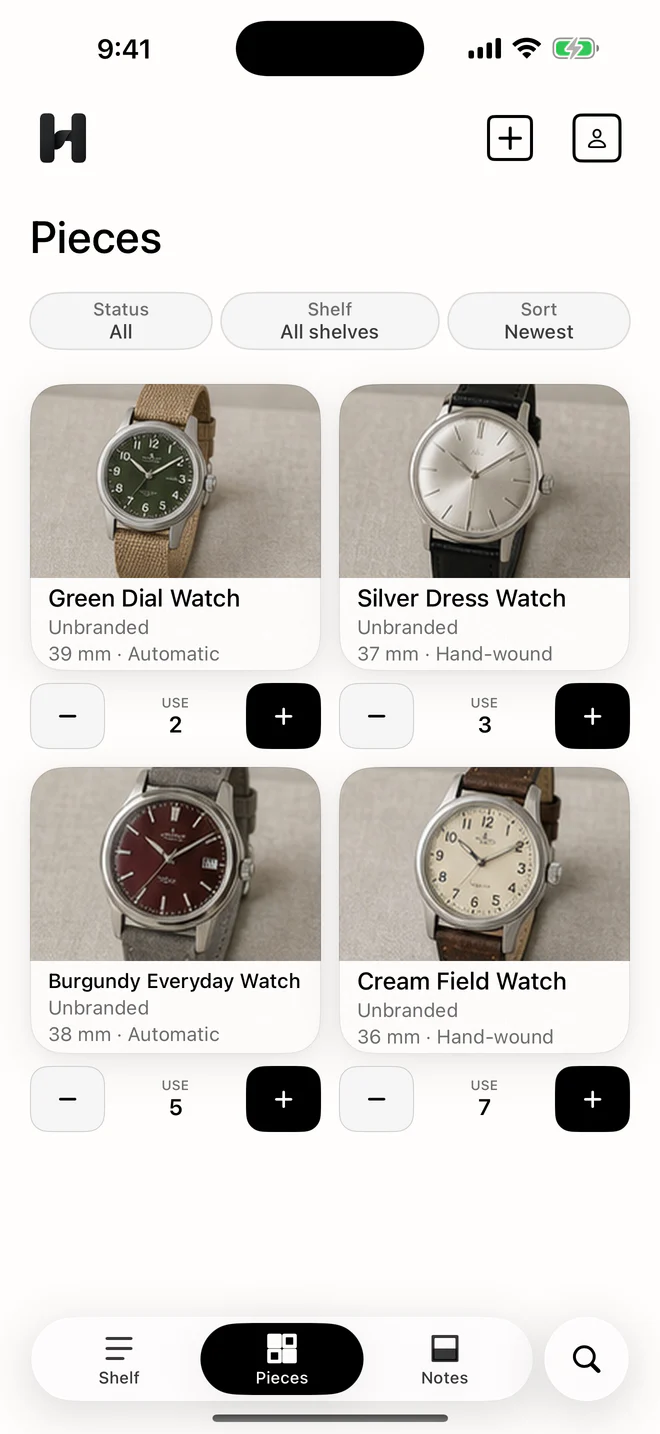
Add what a watch cost, and Hoblio shows what it works out to for each day you've owned it. A watch you wear every day quietly settles into a small number. One you bought and set aside stays a larger one. Tap Use on the days you wear a watch, and you'll also see which ones actually make it onto your wrist. No lecture. Just the figures, there when you want them.
A wishlist, kept honest.
The piece you keep going back to look at. The reference you want to handle before you commit. Keep wanted watches apart from the ones you own, so a want stays a want — and the collection only grows when you mean it to.
Yours, and only yours.
Your collection lives on your phone. No account. No cloud. No tracking. Exporting, sharing, feedback, and purchase restore only happen when you choose them. No subscription, either — Hoblio Pro is one price, paid once. And no streaks, no reminders. A watch keeps its own time; it doesn't need the app to nag you about it.
Put your collection in your pocket.
Open Hoblio, pick Watches, and start with the ones on the dresser right now. The specs and service dates can follow as you fill them in. In a few minutes the whole collection is in one place — yours to come home to. The free tier covers one shelf and ten pieces; Hoblio Pro lifts both for a single one-time price.